A stack of radical political education materials arranged on a matte black metal shelf: vividly colored books with titles about abolition, transformative justice, and community organizing, alongside a thick spiral-bound zine titled “Central Harlem Study Group.” A pair of highlighters and sticky notes are scattered on top, with bold annotations visible on an open page. The shelf stands against a textured off-white wall, with a bright desk lamp casting warm, focused light from the upper right, creating crisp shadows and a sense of intensity. The photographic image is shot at eye level, using a narrow depth of field that keeps the central books tack-sharp while softly blurring the edges. The overall atmosphere is bold, studious, and insurgent, conveying political education as a tool for liberation.

Grantmaking Principles

How we resource grassroots abolitionist work through transparent, community-accountable funding.

Grants

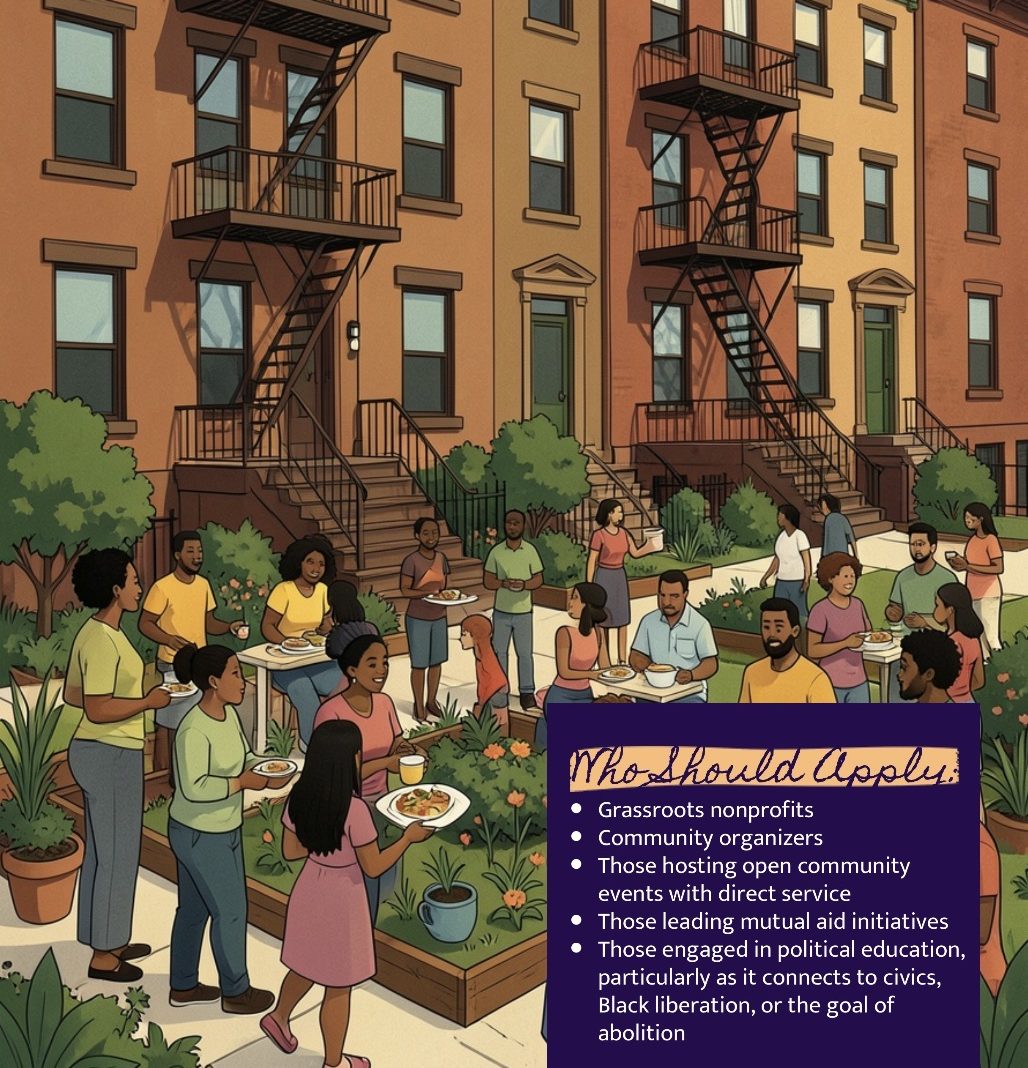
Radical Love Foundation provides microgrants to grassroots organizers for mutual aid and political education projects that center community care, especially in Black and Brown neighborhoods. We prioritize small, community-led groups over large nonprofits or electoral campaigns.
A sturdy wooden table covered with a carefully organized spread of mutual aid essentials: neatly stacked brown paper grocery bags with handwritten labels, rows of fresh produce in reusable cloth sacks, envelopes stamped “Emergency Grants,” and a small, well-worn notebook open to a bold header reading “Community Care Plan.” The table sits in front of a large window framed by exposed brick, with overcast daylight softly illuminating the scene and creating gentle shadows underneath each object. Photographic realism with a shallow depth of field keeps the focus on the supplies while the background of blurred urban rooftops hints at a dense city. Captured at a slightly elevated angle, the mood is practical, urgent, and hopeful, emphasizing direct service and mutual support.

Apply Now

Share your project, needs, and timeline so we can assess alignment with our community-centered grant criteria.

← Back

Thank you for your response. ✨

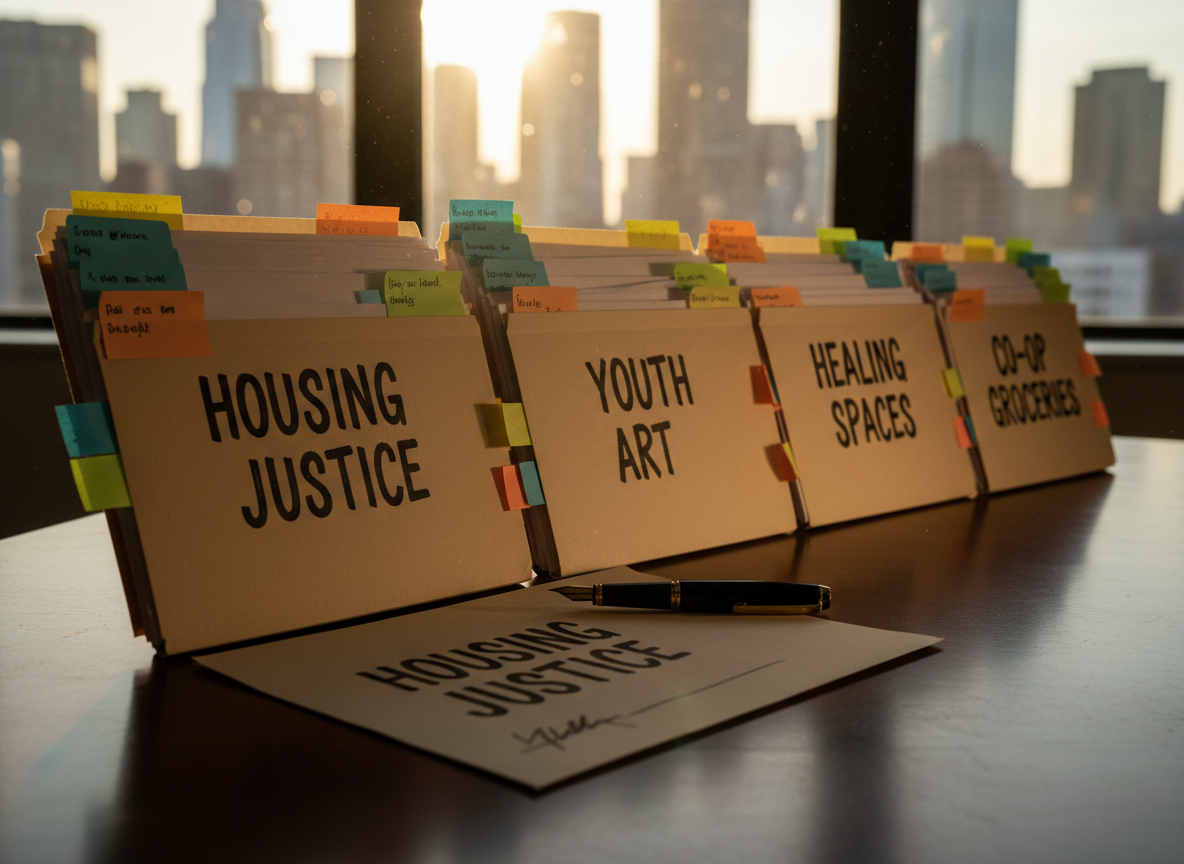
A row of community grant folders spread across a dark walnut desk, each thick kraft-paper folder stamped in large, ink-brush letters with words like “Housing Justice,” “Youth Art,” “Healing Spaces,” and “Co-op Groceries.” Colorful sticky notes protrude from the edges, and a black fountain pen rests diagonally across one folder, leaving a fresh signature line still glistening with ink. The desk is set near a large city-facing window at golden hour, with warm sunlight streaming in, catching dust motes in the air and creating long, dramatic shadows. Shot from a low, side angle in photographic realism, the composition uses the rule of thirds to emphasize the folder labeled “Housing Justice.” The mood is focused, decisive, and empowering, highlighting grantmaking as a direct investment in community care.

Timeline

Review cycles occur quarterly, with decisions grounded in collective, community-based review rather than charity models. Explore expected timelines, what to anticipate after applying, and answers to frequently asked questions.